I’m actively building something I think is special — Normie (normie.one), a personality-poll platform that’s equal parts game, self-discovery tool, and community. Of all the projects I’ve worked on across tennis, tech, and crypto, this one might be the most fun, the most rewarding, and honestly the most interesting. Here’s a piece I wrote about why a simple “Would You Rather” question reveals far more about you than you’d expect.
What Your Would-You-Rather Answers Reveal About Your Personality
You’ve played it a hundred times: would you rather have unlimited money or unlimited time? You blurt out an answer, everyone laughs, you move on.
But psychologists would tell you something interesting: there are no throwaway answers. The way you resolve an impossible choice reveals how your mind actually works — your risk tolerance, your values, what you optimize for when everything costs something.
Here’s what your favorite answers might be saying about you.
1. Money vs. time → What you believe is scarce
“Would you rather have $10 million or 10 extra years of life?” is the purest values question ever asked at a party.
- You pick the money: you likely believe time is abundant but opportunity is scarce. You trust your ability to convert resources into experiences. (Or you’re under 30 — ask again at 50.)
- You pick the time: you’ve internalized that money is renewable and time isn’t. Research on well-being backs you up: beyond a comfort threshold, extra money barely moves happiness, while perceived time scarcity tanks it.
Neither answer is wrong. But your answer reveals which scarcity keeps you up at night.
2. Fame vs. anonymity → Your relationship with attention
“Would you rather be famous or unknown but rich?”
- Fame pickers tend to score higher on extraversion and desire for social impact — they want their existence to register.
- Anonymity pickers usually prize autonomy and control. They’ve figured out that attention is a tax, not a prize.
Fun twist: ask someone why they want fame. “To help people” and “to be admired” are very different personalities giving the same answer.
3. The trolley-problem types → How you make moral trade-offs
Questions like “would you rather save five strangers or one loved one?” expose your moral operating system:
- Utilitarians maximize total good — five strangers win, and they can explain why without flinching.
- Loyalists protect their circle first. They’ll argue — correctly, per most moral philosophy — that a world where everyone abandons their loved ones for strangers is a worse world.
Your answer predicts how you’ll act in real dilemmas far better than any personality quiz, because it bypasses rehearsed self-image and forces a felt choice.
4. Past vs. future → Where your identity lives
“Would you rather relive your best day or preview your best future day?”
- Past pickers are often high in nostalgia and gratitude — their identity is anchored in what’s been built.
- Future pickers skew toward openness and ambition — oriented around what’s possible, sometimes at the cost of appreciating what’s here.
Therapists note: people stuck in regret pick the past; people stuck in anxiety pick the future. The healthiest answer might be “neither — I’m good right here,” but that’s cheating.
5. Comfort vs. adventure → Your risk thermostat
“Would you rather have a guaranteed comfortable life or a 50/50 shot at an extraordinary one?”
This is basically a risk-tolerance questionnaire disguised as a game. What’s revealing isn’t the answer — it’s the speed of the answer. Instant “extraordinary” people are comfortable with variance. Long deliberators are running expected-value math in their heads. Both are valid; they’re just different hardware.
6. Truth vs. happiness → Your epistemic values
“Would you rather know an uncomfortable truth or live in a comfortable illusion?”
- Truth pickers value accuracy over comfort — the same trait that makes someone great at science, debugging, and difficult conversations.
- Happiness pickers understand something subtle: that some truths have no action attached, and carrying them is just suffering with extra steps.
Philosophers have argued about this for 3,000 years. Your gut answer places you in the debate.
7. What your hesitation reveals
Here’s the meta-insight: the questions you find hardest are the most diagnostic. Easy answers mean the trade-off doesn’t touch your real values. The ones that make you squirm — where you say “that’s not fair, I need more information” — are pointing directly at an unresolved tension in your life.
Pay attention to those. They’re free therapy.
Try it on yourself
Next time you play, don’t just answer — notice:
- Which questions you answer instantly vs. slowly
- Whether you optimize for yourself or for others
- Whether your answers change when someone you admire is listening (they will — and that gap is also data)
🎯 Ready to find out how normal — or gloriously weird — you really are?
Visit Normie.one and vote in today’s poll. One question a day, thirty seconds, and you’ll see exactly where you land compared to thousands of other Normies on the Normie Index.
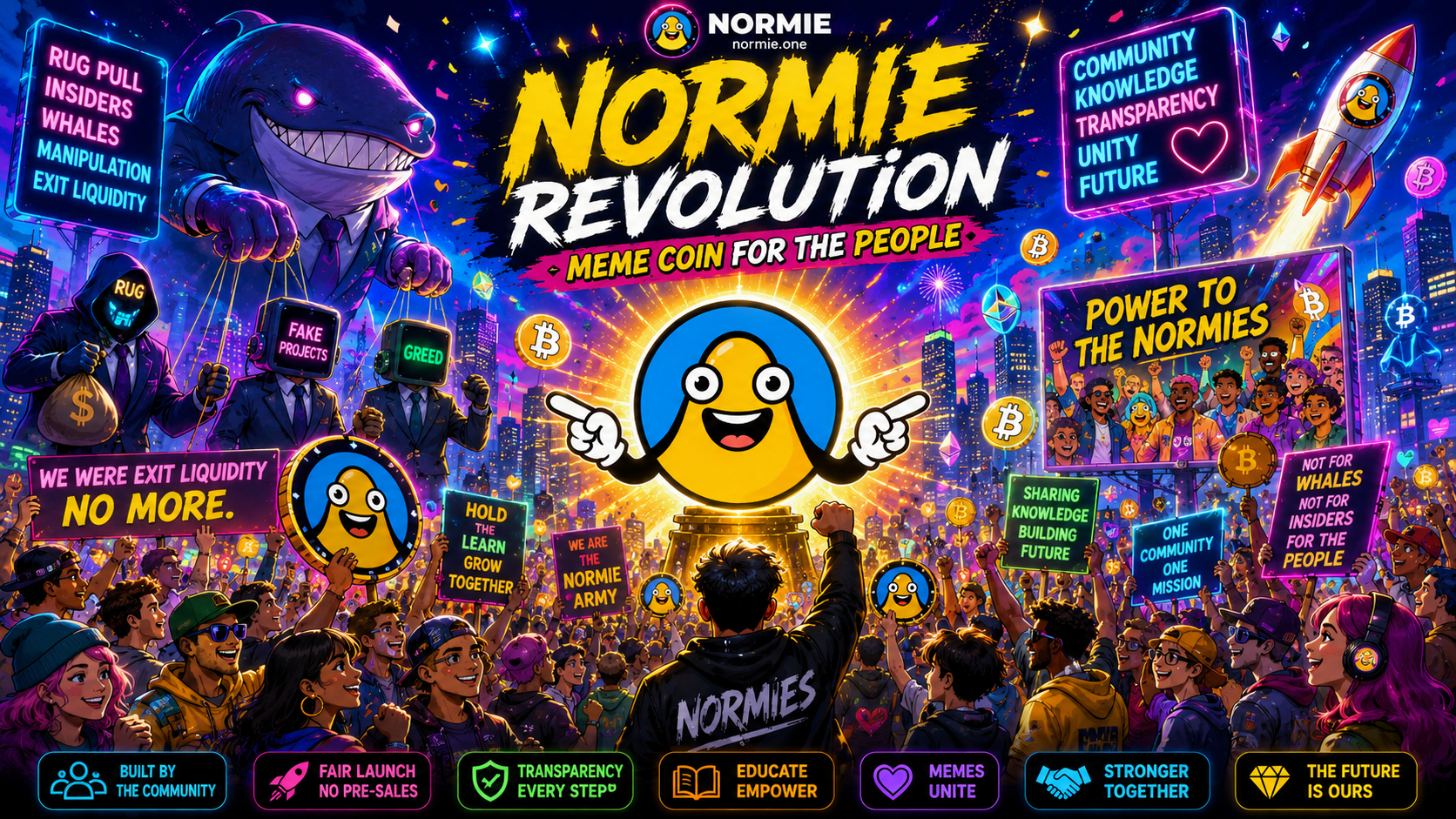
💛 The $NORMIE Token
Normie is powered by $NORMIE, the community memecoin on Solana — earned by playing, voting, and creating polls on normie.one.
Contract Address (CA):EiCDDbfnvtMAkN3vTjCmQCYtoeJtG4Wg3JTedRG8pump
Trade on Axiom: axiom.trade/@richmemr
Direct pair: axiom.trade/meme/5QkvB92rbj3GX2F8Qwd523kszusnsSMgxFLYjXzv2t7h
Join Axiom and earn rewards while you trade.
Not financial advice — memecoins are volatile. Always do your own research and verify the contract address on normie.one before buying.