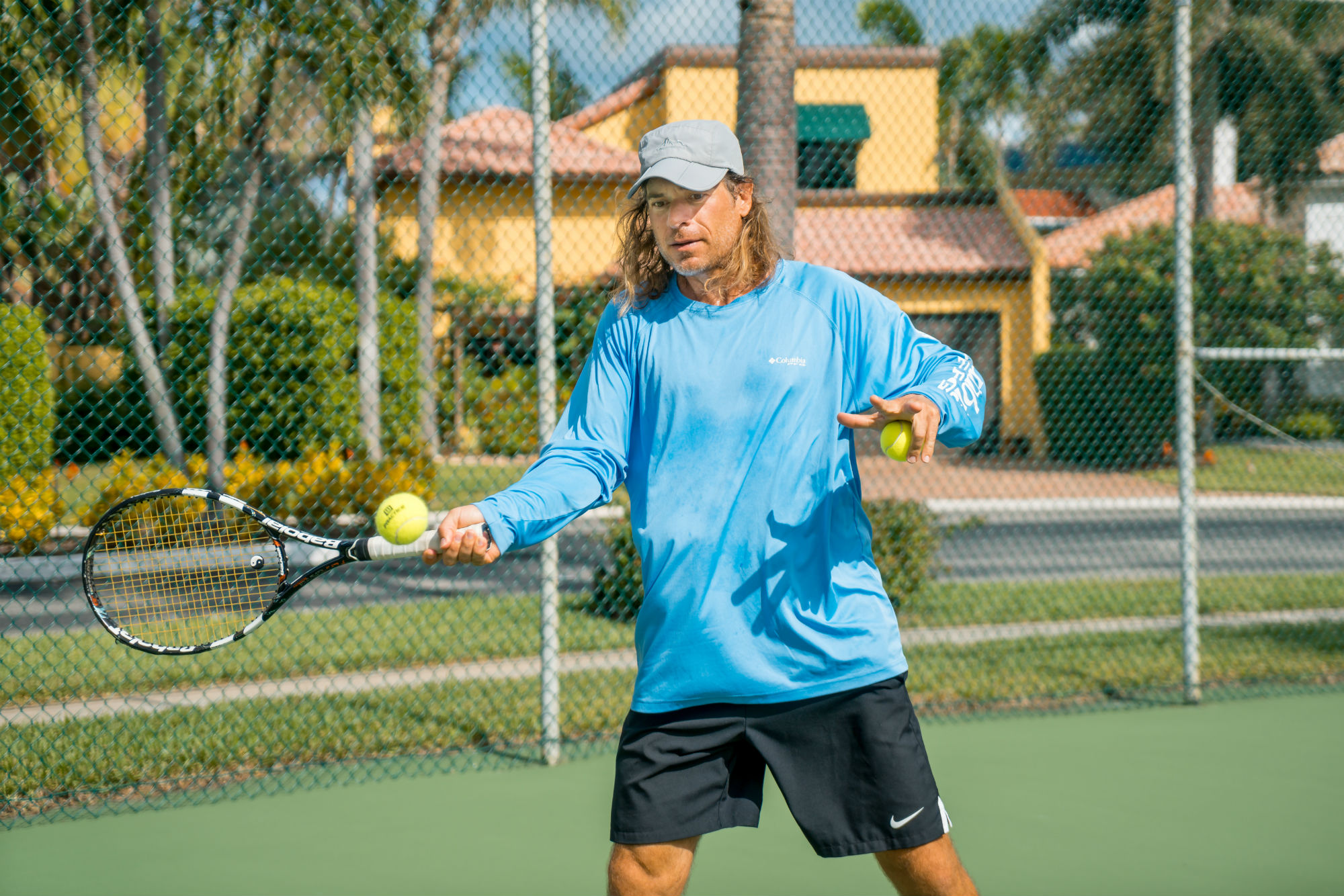
Interview: Rich Benvin & Teo Davidov

Teo Davidov and Rich Benvin Interview – Balance, Power, and Belief: Teo’s Path to the Pro Tour

After the Delray Beach Final at ProWorld Tennis Academy Sponsored by HotelPlanner

Rich Benvin:
Teo, first of all congratulations on reaching the final here in Delray Beach. Tough conditions today, a very strong opponent in Tyler Zink — ATP ranked around #320 — and a high-level match. How did you feel out there today?

Teo Davidov:
Thank you. It was a tough match. The wind made things tricky, especially early on, and Tyler played really solid. He held serve really well and didn’t give many free points. I think I only broke his serve once in the whole match. I was maybe going for a few shots that were a little too big, trying to change momentum, and that led to a few too many mistakes. But overall, I’m really pleased about getting to the finals this week.


Rich:
The final score was 6-2, 6-4 for Tyler Zink, but the second set especially looked like it could turn at several moments. Did you feel the momentum shifting?

Teo:
Yeah, definitely. I started to move better in the second set. I was adjusting to the wind and finding my rhythm more. There were a few games where I felt like if one or two points went differently the match could have gotten really interesting. Tyler stayed calm though — he’s very experienced and knows how to close out matches.


Rich:
He’s a seasoned pro with a UTR around 13.80, probably the highest level player in the tournament. What did you learn playing someone at that level?

Teo:
That the margins are really small. At that level, players don’t give you many opportunities. When you get a chance, you have to take it. Tyler was very solid, very clean ball striker. No big weaknesses. Matches like that help you understand what the next level looks like.


Rich:
You’ve had an incredible couple of weeks. Not long ago you were playing on clay in Naples, where you earned three ATP ranking points, becoming one of the youngest players in history to achieve that. Then you come here to Delray, switch surfaces, and reach the final. How do you reflect on that stretch?

Teo:
It’s been a really good learning experience. The Naples tournament was special because getting ATP points is a big milestone. Then coming here to hard courts and making the final shows the progress. Every tournament teaches something different.


Rich:
Speaking of surfaces — you spent quite a bit of time on clay recently. Did you feel the transition back to hard courts?

Teo:
A little bit, yes. Clay gives you more time and longer rallies. Hard courts are faster and the points are more direct. But I enjoy both. The more time I spend on hard courts again, the better it feels.


Rich:

Let’s talk about that quarterfinal comeback. You were down 6-4, 5-2. Most players at any age fold there. What were you thinking?

Teo:

I wasn’t thinking about the score. I was thinking about the next ball. Mbithi was playing really well — low slice, clean strikes, no free points. I just told myself, “Raise the level.” Make him feel more weight in every rally.

When I stopped thinking about losing and focused on competing, the match shifted.


Rich:

That’s maturity beyond your years. Where does that mental toughness come from?

Teo:

Training. My dad pushes me through uncomfortable moments in practice. If you train hard enough, matches feel familiar. Pressure becomes normal.


Rich:
Let’s talk about your game style. You’re known for the two forehands and ambidextrous play. When you’re in a match like today, against someone hitting the ball very cleanly, how does that affect your tactical decisions?

Teo:
It gives me options. I can change directions and angles from both sides, which helps create different patterns. But against strong players you also need to stay disciplined. If you try too much too early, it can backfire.


Rich:
You’ve always been very calm on court. Today there were some tough moments, but you stayed composed. Where does that come from?

Teo:
My mindset. My dad always talks about staying present and not reacting emotionally. Tennis is about solving problems point by point.


Rich:
Let’s switch gears. Walk us through your pre-match ritual. What does a typical match day look like for you?

Teo:
Usually, I wake up about three hours before the match. I start with stretching and breathing exercises. Then I do some yoga to get my body loose and centered. After that I eat breakfast — usually yogurt, fruit, something light but energizing. Then I do a good warm-up on court, listen to some music to relax, use resistance bands for my arms, and just stay loose. Then it’s showtime.


Rich:
Music before matches — what kind?

Teo:
Depends on the mood. Sometimes something calm, sometimes something more energetic. It helps me focus.


Rich:
You’ve been developing incredible court sense and ball movement. Do you feel that part of your game improving?

Teo:
Yes, that’s something I work on a lot. Understanding the geometry of the court, how to move the ball and open space. It’s not just hitting hard — it’s about positioning.


Rich:
Another big strength is your fitness and discipline. Tell people a little about the off-court work you do.

Teo:
A lot of agility and speed training. Strength work, but controlled and balanced. Yoga every day. Recovery is important too — stretching, massage, and making sure the body stays healthy.


Rich:

Teo, one thing people might not realize is how serious your physical training is. Your weightlifting coach told me you’re testing at levels that could put you on track for Olympic-level weightlifting numbers. That’s incredible for someone your age. Tell us about that training.

Teo:

Yeah, my weightlifting coach pushes me a lot, but we always keep the priority clear — tennis comes first. He knows that. The goal isn’t to become a weightlifter, it’s to build strength and power that help my tennis. But I do enjoy lifting and improving. It makes me feel stronger on the court.


Rich:

That’s the key — power and balance. What kind of lifting do you focus on?

Teo:

Mostly Olympic-style movements — cleans, pulls, squats — but always controlled and supervised. We focus on explosive strength and stability, not just heavy weight. My coach adjusts everything so it supports tennis and recovery.


Rich:
Your father Kalin has been instrumental in your development. How important is that relationship?

Teo:
Very important. He’s helped me through every stage of tennis and life. We focus on the whole picture — not just tennis, but health, balance, and mindset.


Rich:
You’ve had success in junior events, and now you’re making strides in pro tournaments. What’s next? What does the schedule look like?

Teo:
Right now we’re deciding whether to play some junior national tournaments or continue with more pro events. Maybe a combination for a while. But we all know where I want to go — moving up in the pro ranks.


Rich:
Exactly. The trajectory is clear. One last question — when fans watch you play, what do you hope they take away from your tennis?

Teo:
That tennis can be creative. You can play differently. And that hard work and discipline can make unusual ideas work.


Rich (Closing):
I’ve known Teo since he was 5 years old hitting balls and experimenting with both hands on the racquet. Watching him grow into a competitor capable of reaching pro finals and earning ATP points has been incredible. The results will come, but the journey itself is already remarkable.

Watching Teo Davidov develop over the years has been fascinating. The ambidextrous game draws attention, but what really stands out is the discipline behind it — the training, the mindset, and the willingness to grow through challenges.

From earning ATP points in Naples, to battling through a dramatic quarterfinal comeback in Delray, to competing in a final against an ATP Top-320 professional, the trajectory is clear.

The journey is just beginning.